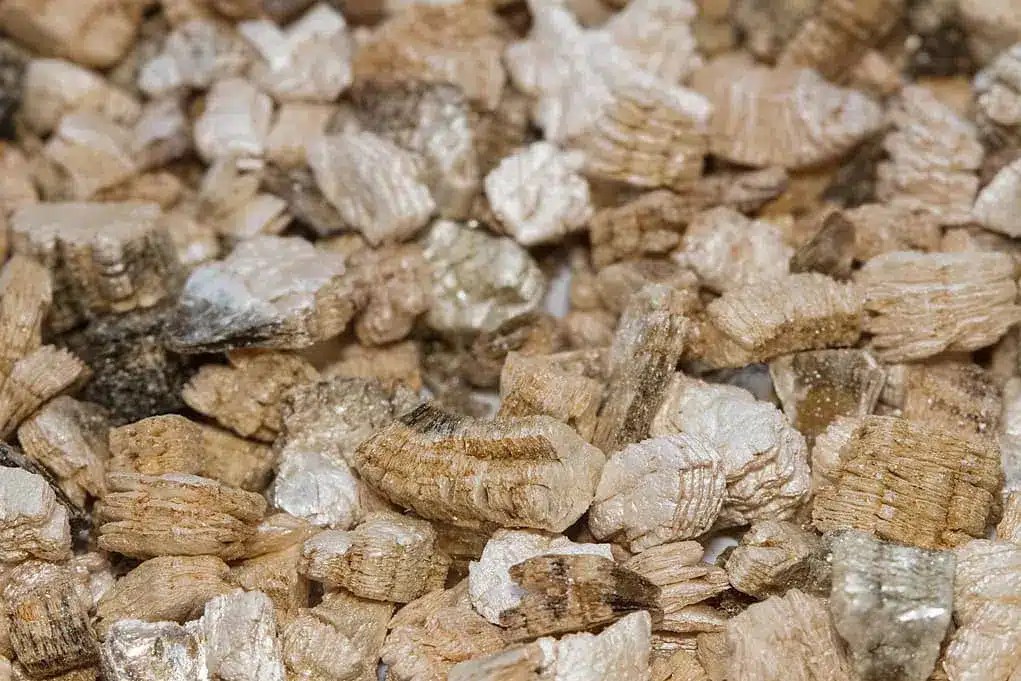
Asbestos is a material that was used in homes built before the 1990s. Asbestos durability was used in roof shingles, pipe insulation, attic insulation, and flooring adhesives. Additionally, builders used asbestos insulation in the walls of the homes being built. What does asbestos insulation look like? The two types are loose fill and vermiculite. They are fluffy, granular, lumpy, and pebble-like.
Asbestos can be found in rock and soil and asbestos is a naturally occurring material. While building construction materials are created, rock and soil are needed. Unfortunately, before the 1990s asbestos was never removed from these materials.

Asbestos removal should be done with caution. Disturbing asbestos insulation can release asbestos fibers into the air and this can cause health problems. Identifying asbestos insulation should be done by a professional. Also, they should check the wall insulation and attic insulation.
Images Of Blow In Insulation & Asbestos Fibers
Believe it or not, there are three main safe materials that you can use as insulation in your home. Those are cellulose, loose-fill, and rock wool.
Removing asbestos from your attic or walls should never be done by a homeowner. It is best to call a professional company that specializes in asbestos insulation removal. Depending on the amount of asbestos and areas that need it removed will determine how much you pay. The national average cost to remove asbestos insulation is between $800 and $15, 000. The cost can be reduced by choosing a reasonable company that understands the amount needing to be removed.
Now that you understand what asbestos insulation looks like, you can reach out to the right company to remove it from your home. Additionally, if it turns out that you just need your attic insulation removed, be sure to select the correct vacuum for suction and wear protective gear.
Asbestos Database A Z
Next, when re-installing attic insulation to update your old asbestos insulation, make sure that you have the right attic insulation material that can go around your electrical wires and junction boxes.
Lastly, in some homes or buildings asbestos ceiling tiles were used in parts of the structures. Be sure to read up on how to identify if those ceiling tiles have asbestos in them. This will ensure that you hire the right company to assist with this project.
Using a professional contractor with experience removing asbestos insulation is key for protecting your and your family’s health. Additionally, they can install new insulation with the understanding of how it maintains the integrity of cool air or heat loss. Reach out to your local home inspection team to ensure no other repairs are needed. Also, they can recommend a reputable asbestos insulation removal company.
Asbestos Insulation Identification: What Does Asbestos Insulation Look Like?
Asbestos insulation when left alone is typically not harmful. The moment a rodent or roof leak begins to disturb the insulation is when the homeowner can begin developing health issues. Reach out to your local home inspection team for an insulation inspection during a full home inspection. Also, they can recommend a reputable insulation replacement company. Call on Boggs Inspection Services to get an asbestos inspection during a full home inspection in Lacey, WA, and surrounding areas.insulation was the biggest source of exposure for workers throughout the 20th century, and it remains a toxic hazard in many homes and businesses to this day. was long considered an ideal material for almost all types of insulation, until its cancer-causing effects were revealed to the public.
The naturally occurring mineral has a unique fibrous nature that allows it to take on a cotton-like consistency. The space between the fibers slows down the transfer of heat through the material to make it extremely resistant to heat.
Fibers are easily pulled apart, which allows manufacturers to mix it with other materials such as magnesia to make different types of insulation. If insulation was needed, was used. For much of the 20th century, insulators were often referred to as “ workers” because they handled the material so frequently.
:max_bytes(150000):strip_icc()/how-to-identify-dangerous-asbestos-insulation-4119906_Final-b093b21c2d1e481792507aa588f12da8.jpg?strip=all)
Solved! What Does Asbestos Insulation Look Like?
Loose-fill insulation is designed to be poured onto attic floors or blown into hollow spaces inside walls and other building structures. Fluffy loose-fill insulation — sometimes made almost entirely of the toxic mineral — is extremely dangerous because even a slight air current can disturb it, sending inhalable fibers into the air. This product was also known as attic insulation.
Insulation coverings for pipes, ducts and other plumbing and HVAC components in old buildings often contain . pipe insulation was also a major health hazard on Navy ships for many decades.
Before 1980, insulators typically wrapped pipes with -based air-cell insulation, which is essentially a type of cardboard made out of paper. This kind of insulation becomes crumbly as it ages, releasing large quantities of dust if it is damaged or cut off to be replaced. A product known as wool insulation was also wrapped around pipes.
What Is Asbestos Aib?
One simple way to insulate the wall of a building is to glue a slab of insulation to it. In the past, these insulation blocks or boards were often made of nearly pure , which creates a major exposure hazard whenever such blocks are sawed or damaged. This product was also known as wall insulation.
Spray-on insulation was developed to reduce the amount of labor required to apply insulation and fireproofing materials to ceilings, walls and structural beams. You can see spray-on insulation in many large commercial buildings where the ceiling is coated with a thick layer of grey material.
Unfortunately, many spray-on insulation products contained up to 85% , putting the workers who applied them at extreme risk. Further, these products can be damaged easily, releasing a cloud of fibers into the air. They present a major exposure hazard unless they are thoroughly encapsulated.
Insulators Exposed To Asbestos
Since 1990, spray-on insulation products containing more than 1% have been prohibited in the U.S. unless the products are encapsulated with a bituminous or resinous binder during spraying.
One of the most notorious insulation products is Zonolite insulation. It originated in the 1940s, and production thrived beginning in the 1960s when W.R. Grace and Company acquired the brand. Zonolite is a type of loose-fill insulation made of -contaminated vermiculite, and it was installed as attic insulation in millions of American homes.
Unlike many other insulation products of the time, Zonolite was never actually intended to contain . The vermiculite used in the product came from a mine in Libby, Montana, which was contaminated with . Zonolite contains tremolite , which is a type of known to cause disease at lower rates of exposure than other types of .
The True And False Of Asbestos
An estimated 30 million homes may still have Zonolite in their attics, according to internal documents from the U.S. Environmental Protection Agency and the Agency for Toxic Substances and Disease Registry.
:max_bytes(150000):strip_icc()/how-to-identify-dangerous-asbestos-insulation-411990-04-3ecb68828e7f4966a0f92ef885a5e6cd.jpg?strip=all "style=width:100%;text-align:center;")
One of the most toxic insulation products used in Australia was the fluf attic insulation sold in the 1960s and 1970s by a company popularly known as “Mr. Fluffy.” The lighthearted name comes from the fluffy appearance of the loose-fill insulation product.
The Australian government carried out a removal program in the 1980s but did not appreciate the true extent of the contamination. Even though the fluf insulation was successfully removed from the attics where it had been installed, by that time mineral fibers had already been blown into every nook and cranny of the affected homes.
What Does Asbestos Insulation Look Like
After conducting new tests in 2014, Australian government officials had to inform residents of the so-called “Mr. Fluffy homes” that their homes were still heavily contaminated. Because removing the in the homes poses such a challenge, the government has actually found it less costly to buy the homes outright and demolish them.
Related illnesses, such as is and mesothelioma, develop when microscopic fibers found in insulation accumulate in the body after being inhaled or swallowed. is almost impossible for the body to break down or expel, and over many years the toxic mineral fibers cause scarring, inflammation and genetic damage to cells.
For much of the 20th century, it was common for the content of most insulation products to be 15% or greater, with many products being almost entirely composed of friable , which can easily release dust into the air. Historically, most -related diseases have been caused by occupational exposure. The greatest risk by far is borne by those who worked in the factories that manufactured insulation products.

How To Identify Asbestos Pipe Insulation In Your Home
In addition, whenever construction workers and shipbuilders poured or blew in loose-fill , handled crumbling pipe wrapping, cut blocks to size or sprayed insulation onto a structure, enough dust was released to endanger the health of everyone in the surrounding area. insulation remains in so many buildings in the U.S. that tradesmen are still routinely at risk of exposure.
Families living in old homes and employees working in old commercial buildings are also endangered when aging insulation is disturbed through maintenance, renovation or wear and tear. insulation in old school buildings has created an ongoing public health crisis that has affected multiple generations of students and teachers. Today, -related illnesses disproportionately affect veterans because of the military’s extensive use of the toxic mineral in the

0 Response to "What Does Brown Asbestos Insulation Look Like"
Posting Komentar